What if the fastest way to create value with AI isn’t by chasing a single killer app—but by spotting dozens of everyday moments where AI can quietly make life easier?
That’s the approach behind the OpenAI guide “Identifying and Scaling AI Use Cases”, based on insights from over 300 deployments and 2 million users. This post breaks down the most practical lessons, ready for teams who want to move from “playing with AI” to delivering real impact.
TL;DR – Use Cases Are Everywhere (If You Know What to Look For)
- Start with repetitive tasks, skill bottlenecks, and ambiguous work.
- Teach teams the 6 AI primitives that unlock productivity across any role.
- Use a simple impact/effort matrix to prioritise use cases that matter.
- Think beyond single tasks—map full workflows.
- Build a culture where people experiment, test, and share their own use cases.
Key Principles for Finding Great Use Cases
- Lead from the top. Senior sponsorship is key.
- Start simple. Avoid over-engineering. Quick wins build momentum.
- Make it social. Hackathons, Slack channels, and peer GPTs help spread adoption.
The 3 Work Areas Where AI Excels
1. Repetitive, low-value tasks:
- Writing summaries
- Updating dashboards
- Answering common questions
2. Skill bottlenecks:
- Running queries without a data team
- Drafting designs or mockups
- Creating reports without an analyst
3. Ambiguity blockers:
- Brainstorming ideas
- Getting unstuck when starting a task
- Structuring complex plans
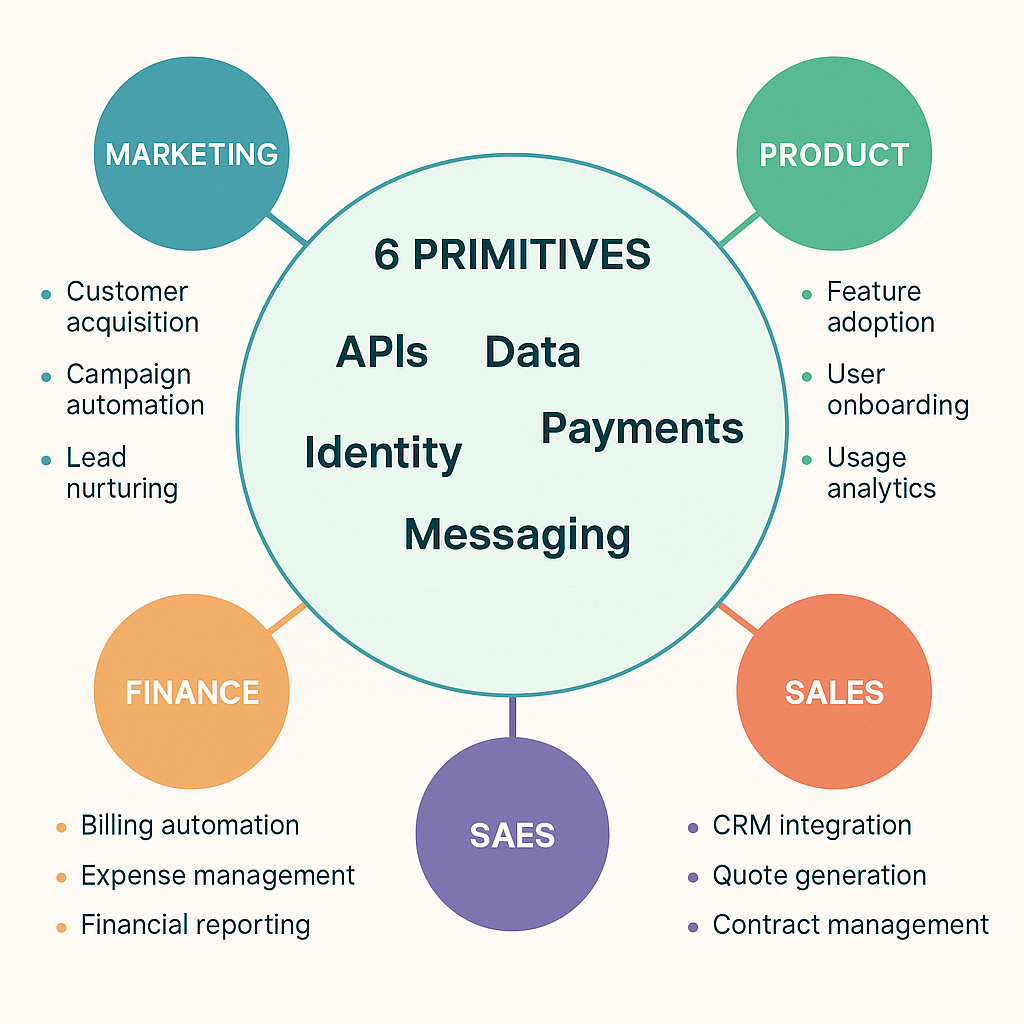
The 6 AI Use Case Primitives
These are reusable patterns that work across most teams:
- ✍️ Content creation – Emails, documents, campaigns, scripts
- 🔎 Research – Market scans, benchmarks, summaries
- 💻 Coding – SQL, Python, HTML, debugging
- 📊 Data analysis – Trends, harmonisation, visuals
- 💡 Ideation & strategy – Brainstorms, plans, feedback
- 🤖 Automation – Scheduled reports, smart summaries, GPT flows
Prioritising with Impact vs Effort
Use a simple 2x2 to decide what’s worth scaling:
| Low Effort | High Effort | |
|---|---|---|
| High Impact | ✅ Quick Wins | 🚀 Big Bets |
| Low Impact | 🤏 Self-serve | ❌ Deprioritise |
Examples:
- Quick win: Auto-summarise meetings
- Big bet: Custom multilingual GPT for credit risk
- Self-serve: Personalised SQL queries
- Deprioritise: Replacing tools that already work well
From Tasks to Workflows
The best users don’t stop at a single task—they link AI across steps:
Example: Marketing Campaign Flow
- Research trends → 2. Analyse audience data → 3. Brainstorm ideas → 4. Create assets → 5. Automate localisation
Building AI Culture
Great AI rollouts aren’t just technical—they’re cultural:
- Run hackathons or “use case olympics”
- Create GPT labs like Estée Lauder’s cross-functional teams
- Set up shared spaces for ideas, templates, and prompts
My Take
This guide is gold for teams trying to make AI useful today. The “6 primitives” idea is so practical—it turns vague possibilities into tangible action. If you want to democratise AI inside your org, this is the playbook.